The Hold
Injury, recovery, and learning how to wait

We started this season in a good place.
Preparation at home was calm and deliberate. There was no sense of rushing, no feeling of chasing something that wasn’t ready yet. Our work had structure, but also space. Enough repetition to build trust and enough restraint to let things settle instead of forcing them forward.
The first tournament week in Brisbane confirmed that feeling.
Marta played some of the best tennis of her career there. Not just in terms of level, but in how clearly she was making decisions on court. Matches unfolded with intention. There was patience when patience was needed, and commitment when it was time to step in. She made the final of a WTA 500, losing only to the number one player in the world.
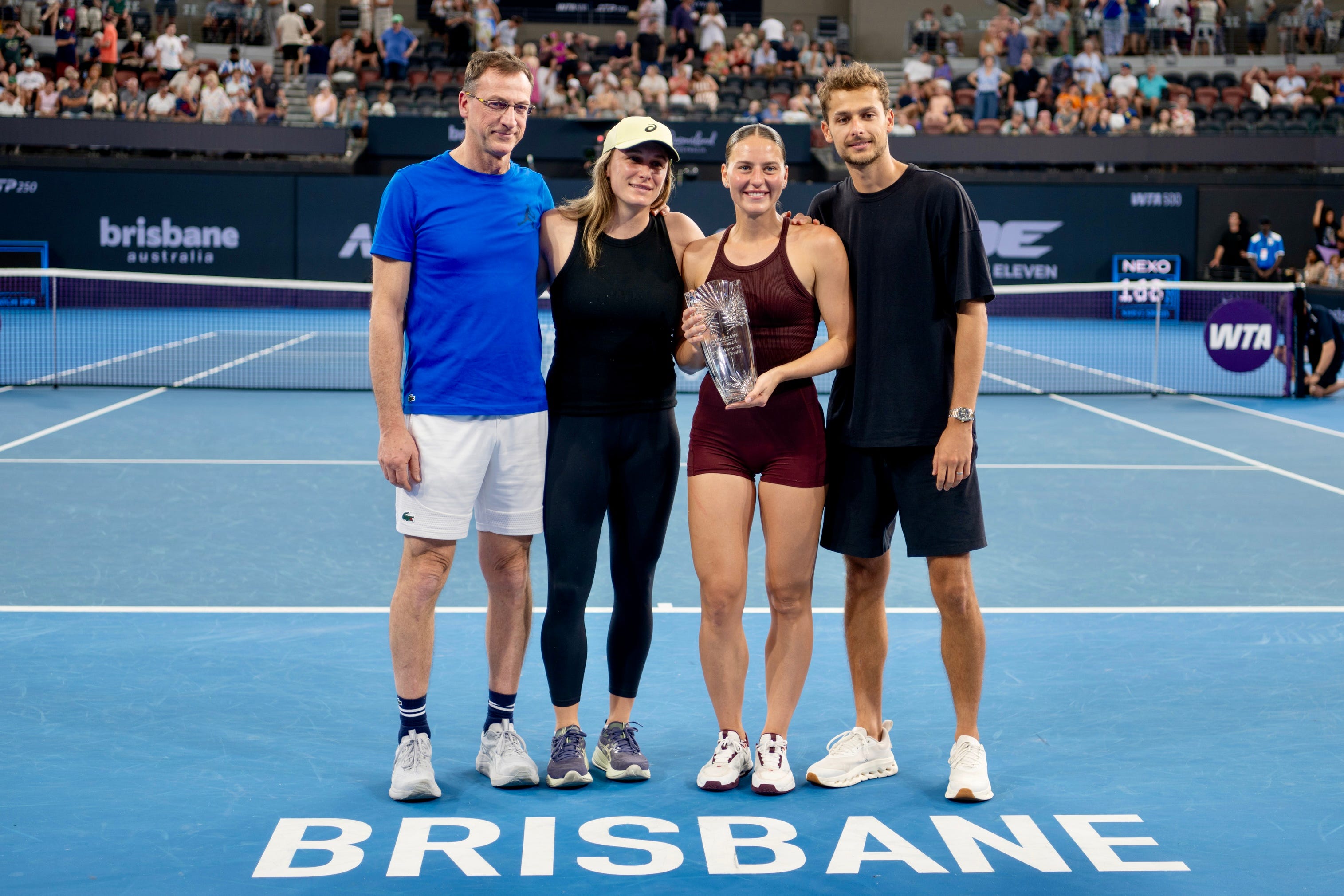
That kind of start of the season helps. It doesn’t guarantee anything, but it tells you the work underneath is translating and that things are moving in the right direction for the right reasons. So we arrived in Melbourne, ready for the first Grand Slam of the year in high spirits. Not euphoric, not reckless — just quietly confident with a sense that we were building something that could hold.
And then, in the first round of the Australian Open, Marta twisted her ankle.
It happened in the third set, but there was no long lead-up, no clear warning signs. Just one movement slightly off, and suddenly everything stopped. Plans measured in months collapsed into days. Conversations shifted from progression to protection, from rhythm to recovery.
That moment set us back around six weeks. Indian Wells tournament that takes place in the beginning of March became the goal. And instead of continuing to build, we found ourselves in a place that every athlete, coach — and eventually every person — knows well.
A hold.
In sport, injuries are the most obvious form of a forced pause.
They interrupt continuity. They remove the assumption that effort automatically leads to progress and they replace certainty with negotiation. You stop pushing forward and start listening more carefully — not because you want to, but because you have to.
To people on the outside, this phase looks simple. Heal, rehab, return.
But when you’ve been through a few injuries comebacks, you know it’s rarely linear.
Injury doesn’t just pause movement. It removes structure. Training blocks dissolve into individual sessions. Long-term thinking is replaced by what you can tolerate today. Progress becomes harder to recognize, even when it’s happening.
And in that space, something else often appears: impatience.
The urge to accelerate, the temptation to prove (or feel) readiness before readiness is fully there. The subtle anxiety that time is being lost, even when time is exactly what’s required.
That dynamic isn’t unique to sport.
Life has its own versions of injury.
They don’t always involve the body, but they create the same sensation. A project that stalls. A relationship that is falling apart. A plan that no longer moves forward, no matter how much effort you apply. Periods where momentum disappears and the tools that usually work suddenly don’t.
Moments of hold.
We tend to treat them as problems to solve quickly. Interruptions to fix. Gaps to close as fast as possible so we can return to what we were doing before.
But just like with physical injury, speed isn’t always the right metric.
In both sport and life, these pauses often arrive as information. Not punishment or failure. Information about load, timing, and alignment. About what the system — whether a body, a career, or a way of living — can actually sustain.
The mistake is assuming that once the surface issue resolves, everything underneath can stay the same.
Injury teaches this brutally clearly. You can heal tissue and still return to the exact conditions that caused the breakdown in the first place. You can be “cleared” and still not be ready.
The same pattern shows up in life.
We rest, but don’t reassess.
We pause, but don’t reflect.
We wait to move again without asking whether we should be moving the same way at all.
Coming back — whether to court or to life — is rarely about returning to where you were.
You can come back the same, but I’m not sure you should actually come back the same. If injury is information, there is plenty of lessons to take from it.
So you come back with more awareness. More caution. Often with a clearer sense of limits that used to feel theoretical. Sometimes with fear that needs to be integrated rather than eliminated. Sometimes with the realization that the pace you were keeping was never meant to be permanent.
One of the quiet traps around recovery — in sport and in life — is the idea that the goal is to get back as fast as possible. Speed becomes the measure of success. But speed without reflection often leads to repetition.
What actually makes a return sustainable isn’t intensity. It’s honesty.
Honesty about what was working and what wasn’t.
Honesty about pressure, even when it was self-imposed.
Honesty about what needs to change so that “being back” doesn’t mean reliving the same cycle.
These aren’t dramatic insights. They emerge slowly, often uncomfortably, in the absence of momentum.
Which is why holds feel so hard. They take away the distraction of movement and leave you alone with questions you might otherwise outrun.
Right now, we are in that space.
We are coming back, step by step. Without shortcuts. Without pretending that time away doesn’t matter. Hoping to be ready as soon as possible, but more committed to being right than being fast.
Because the goal isn’t just to return to competition. The goal is to return in a way that holds.
Injuries — and life pauses — have a way of stripping things down. They remove noise. They expose assumptions. They force clarity, whether we want it or not.
Handled poorly, they become sources of frustration and repetition.
Handled well, they become turning points.
Not because they make you stronger in some abstract sense, but because they demand alignment — between effort, expectations, and reality.
That’s the part of recovery that doesn’t show up on scans or timelines, but it’s the one that often determines what comes next.
On court — and far beyond it.
Hard luck !!!
Marta played nicely in the Indian tournament and seemed to enjoy it ! Contributing magnificently in the finals ! Wishing her a speedy recovery!!!
Thanks for sharing these insights!😍