Three Years In
A reflection on three years of coaching, trust, laughter, and growth

July 15 marks three years of working with Marta.
Three years sounds simple when you say it like that. But in tennis, three years is a lot. It is a lot of practice court bookings, hotel check-ins, delayed and canceled flights, early mornings, late matches, good dinners, bad days, small wins and big losses… and so many other moments.
From the outside, a coaching partnership gets measured in results. Titles, rankings, breakthroughs. And of course those things matter — this is professional sport after all. As coaches, we get hired to make the player better. But the real work of a partnership is mostly invisible.
The conversations after losses.
Over three years, Marta and I have had many of those. Some were easier — not too many emotions, and enough clarity to assess what went wrong. Others… oh boy. There were a lot of tears and the future looked very grim.
The patience when things aren’t moving.
Three years is a lot of time — enough to have a good season, a bad season and a breakthrough season, apparently. But as for any good competitor, whatever you achieve is rarely enough. You always want to get better, but it never comes right away.
The ability to come back after misunderstanding each other.
Over the course of three years, it is needless to say that you will have a lot of misunderstandings and you have to find a way to work through them. What comes in handy is the honesty to say what needs to be said and the awareness to know when saying nothing is actually more useful.
Last year, on our two-year anniversary, I wrote about what it means to stay. About the messy parts — the repair and the kind of trust that doesn’t get built when everything is easy, but when both people are willing to come back to the table after things get uncomfortable.
At the time, that felt like the lesson. Now, a year later, I think there’s another one.
Staying isn’t the whole story, because once you stay, you still have to keep evolving.
Longevity sounds romantic from the outside. Like if two people work together long enough, they must have found some perfect rhythm. Like the hard part was just surviving the difficult moments, and after that — the relationship runs itself.
I can confirm: this is not true.
The danger in any long partnership is that you start trusting the history more than the present. You assume that because something worked before, it should keep working and that because you’ve survived difficult moments, you are automatically prepared for the next ones.
But people change. Players change. Coaches change. And success — as much as disappointment — changes you too. If the relationship doesn’t keep adjusting, history can become a weight instead of a foundation.
Let’s go back to the very beginning. When you start a partnership, it has a certain energy. Everything is new, so you are curious. You’re learning each other, figuring out what works, where the connection and resistance are. Every reaction means something. Every difficult week feels bigger than it maybe is, because there isn’t enough history yet to know what’s a pattern and what’s just a moment.
Then time passes.
You build memories, you build trust and you develop your own language. You start to know what the other person means even when they don’t say it perfectly (probably our speciality). You know when to push and when to wait. You know when a silence is just tiredness and when it’s something that needs attention.
That kind of knowledge can’t be forced, it only comes from time.
And in coaching, time gives you information that no statistic can. It teaches you the difference between a bad day and a warning sign. Between resistance and fear and between frustration and avoidance. With time, you know exactly when a player needs clarity and when they need space. Whether they need you to fix something, or whether you should just let it move through.
That’s the invisible value of a long partnership. It’s not that things become easier, but that you start to understand more precisely what’s actually happening.
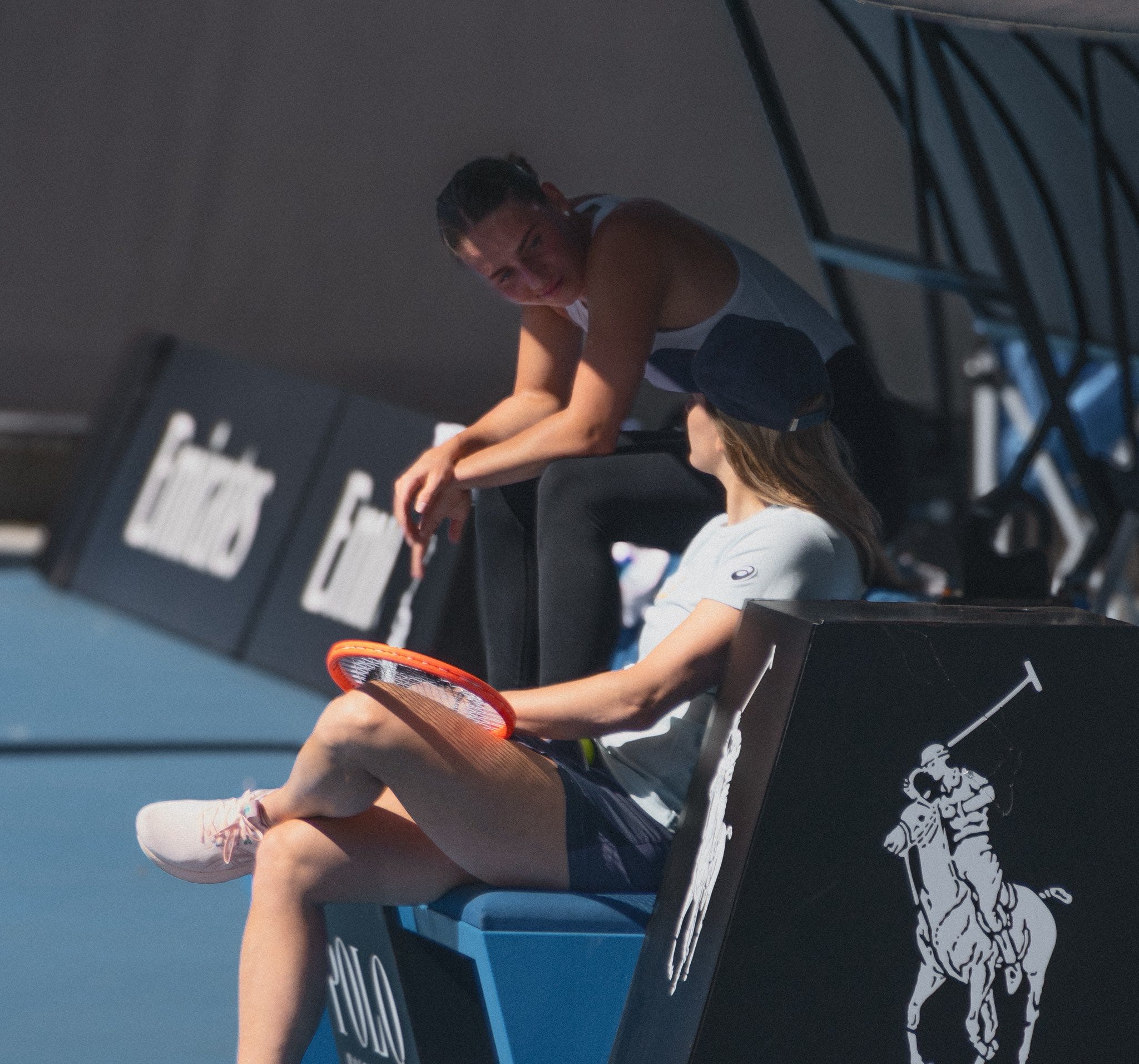
This year, from the outside, there were a lot of visible moments.
Finals. Titles. Big matches. New levels.
Pretty much the kind of results people use to explain a story.
And I get it — sport needs simple narratives. A player wins, so something must have clicked. A result comes and everyone wants to know what changed.
But the truth is that most things don’t suddenly happen. They accumulate.
A good week is rarely just a good week, just as a career-high ranking is not just one tournament. It’s months — sometimes years — of work that wasn’t always obvious while it was happening. That’s why I’m careful with the word breakthrough. Because from the outside, a breakthrough looks like the moment something begins. But often, it’s just the first time other people can see what’s been forming for a long time.
The more meaningful thing for me this year wasn’t that things started showing on the outside. It was that something had shifted on the inside too.
More maturity. Not perfect maturity — not some finished version of anything — but a different kind of understanding. A little more patience with the process, a little more ability to separate a bad day from a big problem and a little more awareness that not everything needs an immediate reaction.
And honestly? That’s growth.
Sometimes we think growth should look impressive. A big change, a big realization. But a lot of the time, growth is way smaller than that. It’s catching yourself before you repeat an old pattern. Having a conversation earlier than you would have before. Knowing when to give space without withdrawing completely, or knowing when to step in without trying to control everything.
That’s what year three has taught me.
That’s the thing about long relationships, in sport and in life. They can’t stay exactly the same and still stay alive.
The roles might stay the same on paper. Coach and player. But the people inside those roles are not the same as they were at the beginning.
The player who started three years ago is not the player standing here now.
And I’m not the same coach either.
I see things differently, I react differently. I understand myself better. I probably interfere less. I trust silence more. I know more clearly what’s mine to carry and what isn’t. I still get it wrong sometimes, but maybe I recognize it faster now.
A long partnership doesn’t just expose the player. It exposes the coach too: it shows you where your own ego is. Where your standards are clear and where they’re actually just fear dressed up as responsibility.
That’s not always comfortable to admit, but I think it’s necessary. Especially with a player like Marta — someone so curious about her own mind, so interested in understanding herself not just as a player, but as a human being.
You can’t coach someone like that only from authority. You have to meet her with honesty.
Because when a player is that aware, that reflective — you can’t hide behind the role for very long. “Because I’m the coach” might work for a moment, but it won’t build anything real.
And coaching someone closely, over years, is not just about helping them grow. You have to grow too. You can’t keep asking another person to evolve while you stay attached to your old way of seeing them.
Sometimes the person in front of you has changed, but your idea of them hasn’t caught up yet. Or the things they needed from you before are not the things they need now.
That’s where coaching becomes less about knowledge and more about awareness.
You have to use the history without being trapped by it. Know the person well, but still allow them to surprise you. Hold the standard, but not hold them to an old version of themselves.
That, to me, is the real work now.
The beginning has excitement. The third year has evidence.
Evidence that the connection wasn’t only chemistry. That the work wasn’t only built on good moments and that trust can become deeper and also more practical. Less dramatic. Less dependent on everything feeling aligned all the time.
Three years in, I think the goal is to have a partnership that keeps becoming more real. One that can hold success without getting carried away by it. A partnership that can hold difficulty without being defined by it. And one that can hold space for two humans evolving — on and off the court. Individually and together.
Is that what a long partnership asks of you? Not to stay exactly the same, not to keep proving the same connection over and over again, but to keep making room for who both people are becoming.
It could well be. And for that, you need trust. The kind that believes that there is enough honesty, care and respect to keep meeting each other there.
Three years ago, we had no idea what this would become. You can have a plan, have goals, have an idea of what you want to build. But you can’t really know what a partnership is until it’s been tested by time, until it has lived through different versions of itself.
And somewhere inside all of that, there’s the part that’s harder to explain.
The laughs. The r i d i c u l o u s moments that make no sense to anyone else. The way a heavy day can suddenly feel lighter because of one look, one comment, one completely random thing that somehow becomes funny only to us.
That matters so much.
This partnership has never been only about work. The work is serious and the standards are high, but there’s been so much life inside it. So much lightness and warmth that has carried us through the heavier parts more than people probably realize.
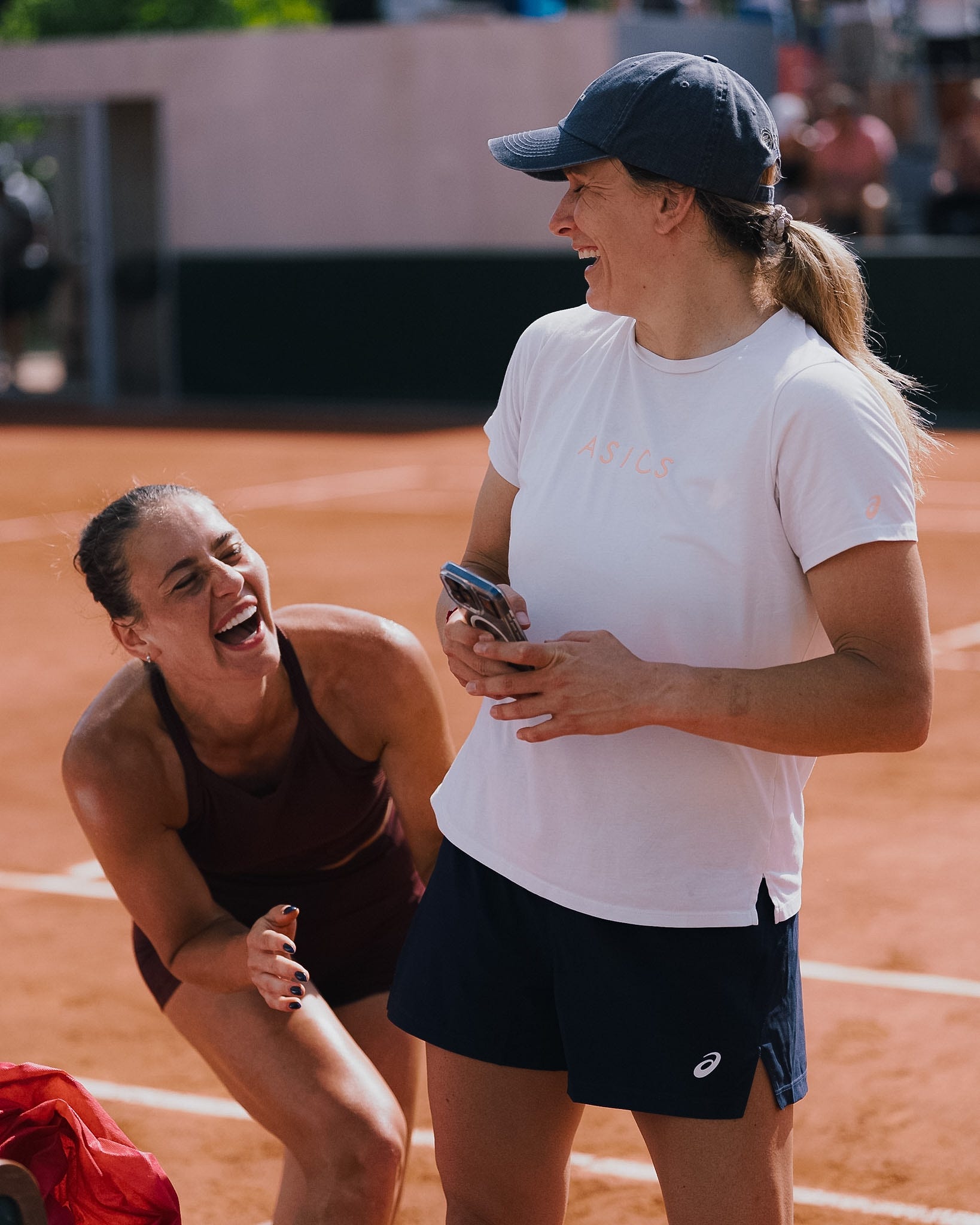
Marta — working with you has given me more lessons, more laughter, and more growth than I could have expected.
You remind me that strength and sensitivity can live very close to each other and that becoming yourself is not always a clean process, but it’s always worth respecting.
And maybe more than anything: you’ve shown me what it means to be trusted.
From the beginning, you gave me a kind of trust I’ve never taken lightly. Three years later, the fact that it’s still there means more to me than I can really put into words.
So yes, I’m grateful for the work. For the lessons, the challenges, the difficult conversations, all the big and little moments that made Mandra, Mandra.
Three years in, we keep on learning. And I’m really grateful I get to do that with you.
My heart 🥹♥️ thank you.
Mandra forever and ever